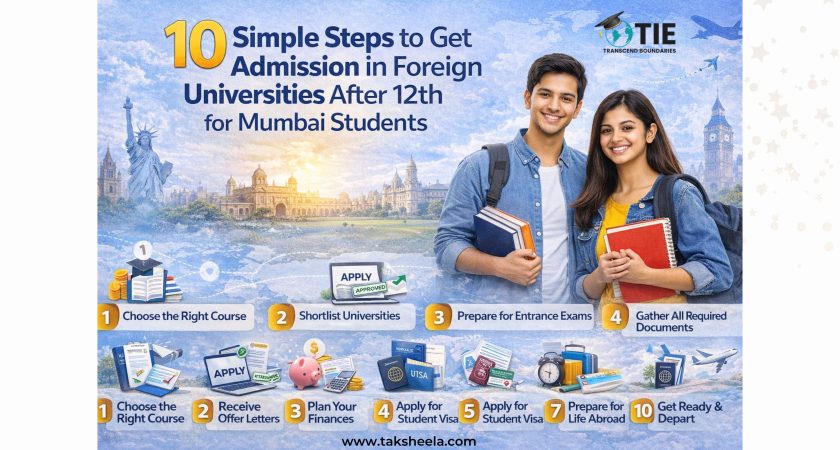
Studying abroad is a dream for many students in Mumbai. Every year, thousands of students explore opportunities for admission in Foreign Universities after completing their 12th grade. Global education offers exposure to new cultures, advanced learning methods, and better career opportunities.
However, the process can feel confusing at first. From selecting the right country to preparing documents, students often struggle to understand the full process. The good news is that with the right guidance and a clear roadmap, the journey becomes much easier.
This guide explains the procedure for taking admission in foreign universities step-by-step so Mumbai students can confidently begin their international education journey.
Key Takeaways:
- Thousands of Mumbai students pursue international education every year.
- Early preparation improves admission success.
- Exams like IELTS and SAT are commonly required.
- Proper documentation is essential for university applications.
- Visa preparation must be done carefully.
- Professional guidance simplifies the admission process.
- Planning finances and accommodation early reduces stress.
- Students should research universities before applying.
Why Are Mumbai Students Choosing Foreign Universities?
Many students from Mumbai are now looking beyond India for higher education. The reasons are practical and career-focused.
Key benefits include:
- Access to globally recognized degrees
- Modern teaching methods and research facilities
- Opportunities to work during studies
- International career exposure
- Strong networking opportunities
According to global education reports, over 750,000 Indian students study abroad each year, and the number continues to grow.
Students often consult abroad education consultants Mumbai to understand country options and university requirements.
Which Countries Are Most Popular Among Indian Students?
Before starting the application process, students should explore countries that match their goals.
| Country | Popular Courses | Key Benefit |
| USA | Technology, Business | Strong research universities |
| Canada | Data Science, Healthcare | Post-study work permits |
| UK | Business, Finance | Shorter degree programs |
| Australia | Engineering, IT | High-quality education |
| Germany | Engineering | Low tuition options |
Choosing the right destination is the first step toward successful admission in Foreign Universities.
1. How Do You Choose the Right Course After 12th?
Selecting the right course is the foundation of your study abroad journey.
Students should consider:
- Personal interests and strengths
- Career demand globally
- Course duration
- Future job opportunities
For example:
- Commerce students often choose Business or Finance.
- Science students may pursue Engineering, Medicine, or IT.
- Arts students explore Media, Psychology, or International Relations.
A reliable abroad consultancy in Mumbai can help students match their academic background with global programs.
2. How Should Students Shortlist Universities?
After choosing a course, the next step is selecting universities.
Students should review:
- University ranking
- Course curriculum
- Tuition fees
- Internship opportunities
- Graduate employment rate
It is wise to shortlist 5–8 universities across different ranking levels.
Many students work with overseas education consultants in Mumbai to build a balanced university list that improves acceptance chances.
3. What Exams Are Required to Study Abroad?
Most universities require standardized exams.
These exams are known as the test for admission in foreign universities.
Common tests include:
- IELTS or TOEFL for English proficiency
- SAT for undergraduate programs in some countries
- ACT for US universities
- PTE Academic for English testing
Preparing early for the test for admission to foreign universities increases your chances of getting into top institutions.
Students typically start exam preparation 6–12 months before applications.
4. What Documents Do Students Need?
Preparing documents is one of the most important steps in the procedure for taking admission in foreign universities.
Essential documents include:
- Academic transcripts (10th and 12th marksheets)
- Passport copy
- English language test scores
- Statement of Purpose (SOP)
- Letters of Recommendation (LOR)
- Resume or CV
Students should carefully check each university’s requirements before submitting applications.
Many abroad education consultants Mumbai help students prepare strong SOPs and organize documents correctly.
5. How Do You Apply to Universities?
Once documents are ready, students can start submitting applications.
There are two common methods:
Direct University Application
- Apply through the official university portal
- Upload documents
- Pay the application fee.
Application Through Consultants
Many students prefer applying through overseas education consultants in Mumbai because they:
- Guide the application process
- Reduce mistakes in documentation.
- Suggest backup universities
Applying to multiple universities improves acceptance chances.
6. What Happens After You Receive Offer Letters?
After applications are reviewed, universities send offer letters.
There are two types:
Conditional Offer
- Admission granted with certain conditions
- Example: final exam scores or English test results
Unconditional Offer
- Admission confirmed without conditions.
Once students receive offers, they must choose the best university and confirm enrollment.
This step is a key part of the procedure for taking admission in foreign universities.
7. How Can Students Plan Their Finances?
Studying abroad requires financial planning.
Students should consider:
- Tuition fees
- Living expenses
- Accommodation costs
- Health insurance
- Travel costs
Ways to fund education abroad:
- Education loans
- Scholarships
- Family funding
- Part-time jobs
A good abroad consultancy in Mumbai often helps students find scholarship opportunities and understand loan options.
8. How Do You Apply for a Student Visa?
After confirming university admission, students must apply for a visa.
Typical visa steps include:
- Filling visa application forms
- Paying visa fees
- Attending biometric appointments
- Visa interviews (for some countries)
Visa approval depends on:
- Valid admission letter
- Financial proof
- Clear study plans
Many students rely on abroad education consultants Mumbai for visa guidance and document preparation.
9. How Should Students Prepare for Life Abroad?
Preparing for international life is just as important as admission.
Students should plan:
- Accommodation arrangements
- Health insurance
- Travel bookings
- Currency exchange
Pre-departure guidance from overseas education consultants in Mumbai helps students understand cultural expectations and campus life.
10. What Should Students Do Before Departure?
Before leaving India, students must complete a few final steps.
Pre-departure checklist:
- Confirm university enrollment
- Book flights
- Arrange accommodation
- Carry academic documents
- Inform the university about your arrival.
Working with a trusted abroad consultancy in Mumbai ensures students complete these tasks smoothly.
Should You Apply Alone or With a Consultant?
Students often wonder whether to apply independently or through experts.
| Self Application | With Consultants |
| Requires strong research | Professional guidance |
| Risk of documentation errors | Better application accuracy |
| Time-consuming | Faster process |
Many Mumbai students prefer working with experienced consultants like Taksheela Institute of Education because they simplify the process and offer personalized guidance.
Why Do Students Trust Taksheela Institute Of Education?
Choosing the right guidance partner makes a big difference.
Students trust Taksheela Institute of Education because they provide:
- Personalized university selection
- Application assistance
- Test preparation guidance
- Visa support
- Pre-departure counseling
Their experience helps students navigate the entire journey from course selection to global admission success.
FAQ
When should students start preparing for foreign university admission?
Students should start planning at least 12–18 months before their intake to prepare for exams, documents, and applications.
Is IELTS mandatory for studying abroad?
In most English-speaking countries, IELTS or similar exams are required to prove English language proficiency.
How many universities should students apply to?
Experts recommend applying to 5–8 universities to improve the chances of acceptance.
Can students work while studying abroad?
Yes. Many countries allow international students to work part-time during their studies and full-time during holidays.